A short history of spam musubi
I ate spam musubi my whole childhood before I ever wondered where it came from. The short version is that it is two stories that met in Hawaii: canned meat from a war, and rice balls from Japan. Here is how they found each other.
Spam came over with the war
Before World War II, a lot of families on the islands ate fish. Much of the deep-sea fishing fleet was run by Japanese immigrant families, and when the war started the government put heavy restrictions on that fishing because of who was doing it. Fresh fish got hard to come by almost overnight.
At the same time, the military was shipping in Spam by the case. It kept for months in the heat, it did not need a fridge, and there was a ton of it around because soldiers were eating it two and three times a day. It got traded, handed around, and worked its way into home kitchens. When the war ended, most places that had lived on Spam went right back to fresh food. Hawaii kept it.
Musubi came from Japan
The other half of the story is older. Japanese families started coming to Hawaii around 1885 to work the sugar and pineapple plantations, and they brought omusubi with them. That is just rice pressed into a shape, usually with a little salt and often a strip of nori, the kind of thing you can carry into the field and eat with one hand. Onigiri, omusubi, musubi, it is all the same idea: a rice ball you can hold.
My tutu made hers plain with a salted plum in the middle. Shaping rice into a neat little handful was already part of island life long before anyone thought to put Spam on top.
The two came together on Kauai
Nobody can point to the very first spam musubi, and the Honolulu papers have said as much over the years. The name that comes up the most is Barbara Funamura. She was a Kauai woman with a degree in food science, and in the early 1980s she was selling musubi at a restaurant called Joni-Hana in the Kukui Grove Center. The story goes that her early ones were triangles, and she later started pressing them in a box mold, which is where the tidy rectangle we know now comes from. She passed away in 2016.
Whether or not she was truly the first, she is the one most people credit, and the rectangle is what stuck.
Why it stuck here
Plenty of places got Spam during the war and forgot about it after. Hawaii did the opposite. The islands still eat more Spam per person than any other state, somewhere around seven million cans a year. You find spam musubi at the gas station, the grocery store, and the 7-Eleven, wrapped in plastic and still a little warm. It is cheap, it travels, and it tastes like home to a lot of us. For a food that started out as a wartime ration, that is a pretty good second act.
Make your own
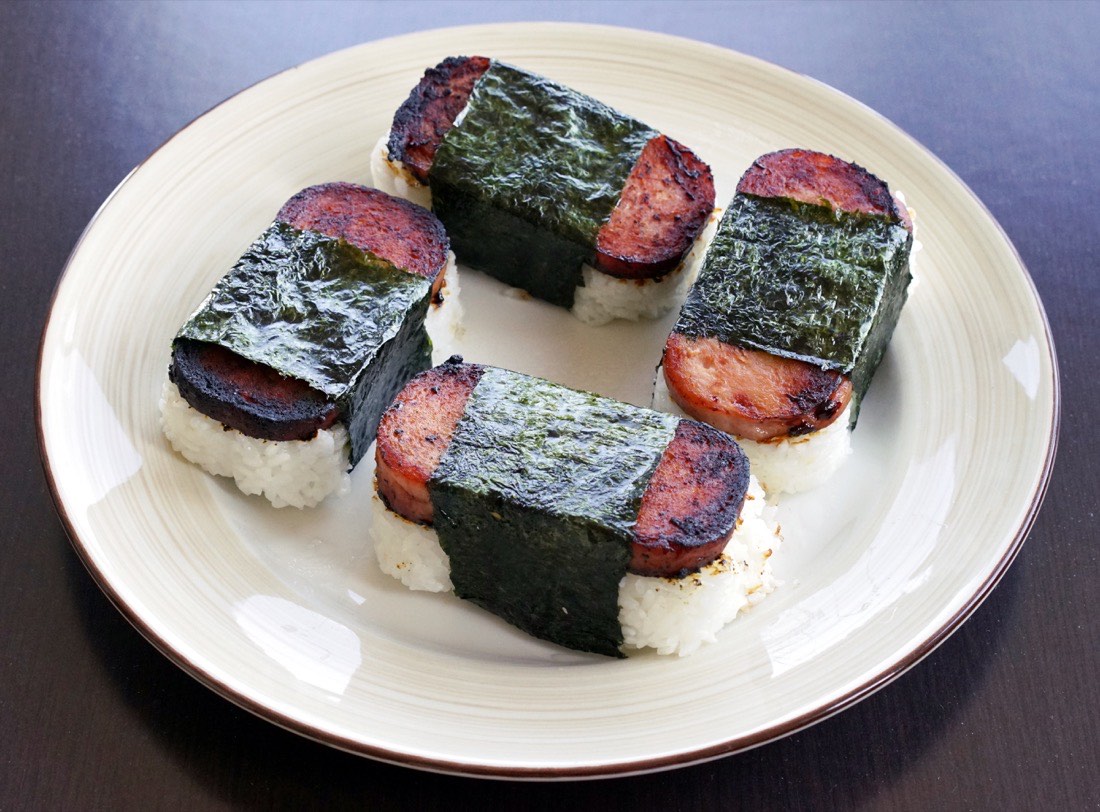
Every family has their own small version, a little more shoyu, a little furikake, teriyaki or plain. Here is the one I grew up on: how to make spam musubi.
Where I read up on this
- Spam musubi, Wikipedia
- Barbara Funamura, creator of Spam musubi, dies at 78, Nichi Bei News
- The WWII Origins of Spam in Asian American Cuisine, TIME
- Japanese Americans and the Wartime Experience in Hawaii, The National WWII Museum